Desember 02, 2010

Photostream : Former US Secretary of State General Colin Powell meets President Barack Obama


U.S. President Barack Obama (2nd L) and U.S. Vice President Joseph Biden (R) meet with former Secretary of State General Colin Powell (L) in the Oval Office of the White House December 1, 2010 in Washington, DC. According to a White House media release, Obama and Powell were expected to discuss various issues including education, and the ratifying the New START Treaty. (Photo by Alex Wong/Getty Images)

Former US Secretary of State General Colin Powell speaks during a meeting with US President Barack Obama in the Oval Office of the White House in Washington, DC, December 1, 2010, where they discussed a wide range of issues including education and the passage of the New START Treaty. (Photo by SAUL LOEB/AFP/Getty Images)

U.S. President Barack Obama meets with former Secretary of State Colin Powell (L) in the Oval Office at the White House in Washington, December 1, 2010. (Getty Images / REUTERS/Jim Young )

US President Barack Obama speaks alongside former US Secretary of State General Colin Powell (L) during a meeting in the Oval Office of the White House in Washington, DC, December 1, 2010, where they discussed a wide range of issues including education and the passage of the New START Treaty. (Photo by SAUL LOEB/AFP/Getty Images)

US President Barack Obama listens to former US Secretary of State General Colin Powell (L) as he speaks during a meeting in the Oval Office of the White House in Washington, DC, December 1, 2010, where they discussed a wide range of issues including education and the passage of the New START Treaty. (Photo by SAUL LOEB/AFP/Getty Images)

Transcript of Vladimir Putin's interview with CNN's Larry King


Russian Prime Minister Vladimir Putin interviewed by Larry King

Please also visit : INDONESIAKATAKAMI.WORDPRESS.COM


December 02, 2010 (KATAKAMI / RIA NOVOSTI) --- Putin's satellite interview with Larry King as provided by the Russian prime minister's website http://premier.gov.ru


Larry King (as translated): Good evening. This is a very special evening for the Larry King show and our guest in the studio is once again Vladimir Putin, the Russian prime minister and formerly president of the Russian Federation. It is a great pleasure for me to welcome him to the Larry King show.

Vladimir Putin: Good evening. It's evening here and morning there. Good morning, Larry. It is very good to see you again. I remember our first meeting, our interview.

Larry King: Mr Prime Minister, thank you for joining us. Let us start right off. You could run for president again in 2012? Are you thinking about doing that?

Vladimir Putin: President Medvedev and I work together closely. We made up our minds long ago that we would take our decision concerning the 2012 elections in the interests of the Russian people.

Larry King: So your answer is "maybe."

Vladimir Putin: We'll see. The elections are still a long way away. They are slated for April 2012. I repeat, we will consult with each other and we will come to a decision that takes account of the economic, social and political situation in the country.

Larry King: OK, let us get to current things.

Vladimir Putin: By all means.

Larry King: What do you think of the leak of military and diplomatic correspondence by the WikiLeaks group?

Vladimir Putin: Some experts believe that somebody is deliberately "inflating" WikiLeaks. Building up the site's authority in order to use it to further their political ends. That is one possible theory, and this is the opinion of experts, which has some currency in our country too. I think that if this is not the case, it shows that the diplomatic service should be more careful with its documents. Such leaks have happened before, in the previous era. I don't see it as any kind of catastrophe.

Larry King: What about the statement by the US Defence Secretary Robert Gates that Russian democracy has disappeared and that the government is being run by the security services? What is your response to the American secretary of defence's statement?

Vladimir Putin: I am personally acquainted with Mr Gates, I have met him on several occasions. I think he is a very nice man and not a bad specialist. But Mr Gates, of course, was one of the leaders of the US Central Intelligence Agency and today he is defence secretary. If he also happens to be America's leading expert on democracy, I congratulate you.

Larry King: So he is wrong in saying that your country is being run by secret security services?

Vladimir Putin: He is profoundly wrong. Our country is run by the people of the Russian Federation through legitimately elected bodies of power and administration: through representative bodies (the parliament) and executive bodies (the president and the government of the Russian Federation).
As for democracy, this is a long-running argument we have been having with our American colleagues. I would like to recall that twice in the history of the United States the presidential candidate who ultimately became president of the United States won more votes in the electoral college but lost the popular vote. What's democratic about that?

And when we tell our American colleagues that there are systemic problems in this sphere we hear, "Don't poke your noses into our affairs. This is how things work here and this is the way it is going to be." We are not butting in, but I would also like to advise our colleagues not to poke their noses into our affairs. This is the sovereign choice of the Russian people. The Russian people unequivocally backed democracy in the early 90s. They will not be swayed from this path. No one should have any doubts on that score. This is in Russia's own interests. And we will definitely continue along this path.

The issue Mr Gates raised in the course of this diplomatic correspondence is clearly related to his desire to bring some pressure to bear on the allies over concrete issues. There are many such issues. Russia is seen as deserving this pressure because it is undemocratic: these measures have to be taken because there is no democracy there. We have heard this a thousand times. We have stopped paying attention to it. But it is still being used as an instrument of US foreign policy. I think this is an erroneous approach to take in the building of relations with the Russian Federation.

Larry King: How would you describe your relationship with President Medvedev? As you know, there are some who say that he is Robin and you are Batman, to refer to those all-American heroes. Or in fact, to get it straight, that you are Batman and he is Robin.

Vladimir Putin: Well, you know when Mr Medvedev and I were considering how to structure our relations and how to run the election campaign, the 2008 presidential election campaign, we were very well aware that many would try to create a split in our common approach to the building of the Russian state and the development of our economy. Because our interaction is a considerable factor in the country's domestic policy. But it did not occur to us that it would be done in such an impudent, brazen and aggressive fashion.

Such claims of course are aimed at insulting one of us, at damaging our sense of pride and at provoking us into taking steps that would destroy our effective interaction in running the country. I have to tell you that we have already grown used to this. I urge all those who are engaged in such attempts to calm down.

Larry King: I hope to be able to visit your country someday soon and to meet you in person. Last time we met in New York, we were in the studio together, and now we are communicating via satellite. What is your assessment of the situation on the Korean Peninsula? You have said that there is a colossal danger that the conflict will intensify. Do you share that fear?

Vladimir Putin: Yes, the situation is acute and very worrying. It cannot but worry us because everything that is happening is happening in the immediate proximity of our borders.

But we sincerely hope that reason will prevail, that emotions will take the back seat and that a dialogue will begin. Reaching an agreement is impossible without dialogue.

Alongside our partners, including the United States, we are working hard towards resolving the North Korean problems, those connected with nuclear programmes, the settlement of the situation between the two parts of Korea, and at various stages this work has yielded a range of results, some were quite impressive and positive. I very much hope that we will be back on track with this positive work.

Larry King: China has proposed holding six-party talks: the two Koreas, China, Russia, Japan and the United States. Do you support this idea?

Vladimir Putin: The president takes the lead on our foreign policy, and the question should, in the first place, be directed to him, but overall I think that Russia would like to see this dialogue continue.

Larry King: Do you think that China should do more to resolve the situation, because it has great influence over North Korea?

Vladimir Putin: This is the US State Department's position. But in principle we should do everything we can to normalise the situation. The People's Republic of China has leverage, especially in economic terms, but it should be remembered that we must respect the interests of the Korean people, both those in its Northern and Southern parts.

We should be patient, get the tone of the dialogue right and formulate a common position for all the six states that are involved in this fairly complicated negotiating process. A common approach is a very important precondition for overall success.

Larry King: You share other states' concerns that Iran is moving towards becoming a nuclear power. How does Russia feel about that?


In this picture distributed by RIA Novosti on Thursday, Dec. 2, 2010, Prime Minister Vladimir Putin is seen during a recording of an interview to CNN in Moscow on Tuesday, Nov. 30, 2010. In the interview broadcasted Wednesday on CNN, Putin said that START isn't ratified, "we'll have to react somehow," including deploying new nuclear technology. Putin said it would be "very dumb" for lawmakers to block the treaty.(AP photo/RIA Novosti, Alexei Nikolsky, pool)


Vladimir Putin: Iran has been implementing its nuclear programme for twenty years now and of late, in recent years, Iran has in one way or another indicated its readiness to engage in dialogue with the international community and with the IAEA. Yes, we are aware that questions remain concerning the early stages of the programme and we share the IAEA's desire for exhaustive answers.

You will, of course, know that we are concerned about any indication of proliferation, about any possibility, even if it is a theoretical possibility for the proliferation of weapons of mass destruction. This applies to absolutely all states, including Iran. At the same time we have no grounds for suspecting Iran of seeking to possess nuclear weapons. But we are cooperating with all our partners, including the United States, within the framework of the United Nations. As you know, so far we have managed to agree on the decisions taken. Our position is open and Iran is aware of it. We will continue to cooperate with all participants in this process until the problem is entirely resolved. I very much hope that this resolution will transpire. I think this is in the interests not only of Iran's neighbour, Israel, which has great fears about nuclear programmes, and the other parties involved in this process but also those of Iran and the Iranian people.

I see nothing reprehensible, nothing that infringes upon Iran's national interests, in it opening up all its programmes and responding adequately to the legitimate interest that the international specialist agency, the IAEA, has taken in its work. I see nothing to fear here, but at the same time I am still of the opinion that Iran has the right to pursue nuclear programmes under the supervision of international organisations.

Larry King: There's a lot of concern now about this new treaty. Your president, Medvedev, warned that there would be a new arms race if NATO and Moscow don't agree on a joint missile shield. And what happens to the relations between the two countries? Will there be another arms race if the United States doesn't ratify?

Vladimir Putin: No. In his state-of-the-nation address to the Russian parliament earlier today, President Medvedev said only that we made a proposal concerning the shared problem of security. He said that through joint effort and shared responsibility, we can eventually solve this problem.
But if there are only negative reactions to all of our proposals, and if a threat emerges on our borders in the form of a new incarnation of the Third Site programme, Russia will just have to protect itself using various means, including the deployment of new missile systems to counter the new threats to our borders and the development of new nuclear-missile technology. This is not our choice. We don't want this. It's not a threat. We are simply talking about what to expect if we can't agree to work together. That's all. Again, we don't want to see this happen.

Larry King: Well, you're saying it's not a threat, but it does sound like a threat. The Wall Street Journal is reporting today that America believes that you're moving short-range tactical nuclear warheads near NATO allies, as recently as this spring. Was that true?

Vladimir Putin: Larry, listen, I'd like to make this clear to you and to all Americans, or, at least, to the audience of your show today. It's not Russia that is moving missiles close to your border; it's the United States that is planning to deploy missiles near Russia's border. We keep hearing that the purpose is to protect yourselves from the threat of a nuclear missile attack by Iran, for example. But Iran poses no such threat at the moment. And if anti-missile and radar systems are set up near our border, even in 2015, they will undermine our nuclear capabilities. So it's only natural that we are alarmed by the prospect. And we are obligated to take some measures in response. This is a response; we are not making the first moves.
While in Lisbon, President Medvedev put forward some concrete proposals about NATO and Russia sharing responsibility for security in Europe. We could reach an agreement with NATO and, by extension, with the United States, on information sharing and on jointly managing these systems. Military experts can do it, provided there is goodwill. But we continue to be told, "We don't want to take your interests into account, we are going to do whatever we want." So we'll just have to view it as a threat to our security, and we'll be forced to respond accordingly. That's what I'd like to get across to the American public.

Larry King: What is your assessment of President Obama?

Vladimir Putin: Assessing his performance is the responsibility of US voters, the people who voted him into office, and American citizens in general.

But as an outside observer, I can say that President Obama has been faced with some formidable challenges, primarily economic and social.

It's not my place to judge whether he did the right thing by pushing for the healthcare law in Congress. But there's no doubt, in my mind, that he did his best on this highly sensitive issue for Americans. He has done everything he can to respond to the aspirations of the American people, which he made the basis of his election platform. He made a promise, and he delivered.

As for his foreign policy, we are grateful that he has softened the rhetoric in US-Russian relations, and that, in terms of practical achievements, he has delayed the implementation of the Third Site programme for a missile defence shield in Europe. This has created new opportunities for dialogue; and we've won some time to try to translate the plan President Medvedev put forward in Lisbon into reality.

Larry King: Ten Russian sleeper agents were arrested in the United States earlier this year, then sent back to Russia in a spy swap. You met with them after their deportation. What was your impression? What was this all about? What did they tell you?

Vladimir Putin: We talked business for a bit. The conversation was wide-ranging.
Well, what can I say? These people deserve respect, I think. I said earlier, and I'd like to repeat this, that their activity in no way undermined the interests of the United States. As you know, these were deep-cover agents. This kind of agent has special objectives, and they are usually called on in times of crisis, for example when diplomatic ties are severed.

Thank God this isn't the case in U.S.-Russian relations at the moment, and I hope it never will be.
Larry King: So they do no spying under your direction.

Vladimir Putin: They had their own assignments. Let me make it clear once again that we're dealing here with deep-cover agents, who only become active during crises and when diplomatic ties are severed, when other forms of intelligence become ineffective or impossible. Again, those agents have not harmed the national interests of the United States. But it's common knowledge that every country, including the United States, operates a foreign intelligence network of its own.

By the way, the methods employed by our special services differ in a good way from those used by US special services. Thank God, neither the agents in question or any other Russian intelligence officers are known to have been involved in creating secret prisons, kidnappings, or torture.

Larry King: The former USSR spent 9 years fighting in Afghanistan. In fact, I believe we discussed this the last time we were together ten years ago. Some call it the Soviet Union's Vietnam. Do you think the United States will do any better in Afghanistan?

Vladimir Putin: First of all, I don't think the comparison is accurate. Our troops withdrew from Afghanistan in a calm and orderly manner, and after the pullout, the Soviet-backed government remained in power for another three years. The Taliban managed to overthrow it only after the USSR collapsed, when Soviet assistance was no longer an option.

I believe the Soviet Union made a lot of mistakes in Afghanistan, the most serious being that we sent in troops. We should not have done this. This much is clear.

The ongoing presence of US and coalition forces in Afghanistan is another matter. As I said, our campaign in Afghanistan can't be compared with the Vietnam War. Similarly, it would be wrong to compare the current US and international operations in Afghanistan to Russia's back in the 1980s.

I believe that the coalition forces have an important and positive mission to accomplish in Afghanistan. We cannot and will not contribute militarily, but we are providing some non-military assistance to our partners from the United States and other coalition countries. We've agreed to allow transit (through our territory), both by air and over land, and we're doing just that.

We also share important information, including intelligence obtained by our special agents, whom you mentioned a short while ago. These are all positive examples of cooperation, I think. There have been cases of Russian helicopter pilots rescuing US and Dutch troops under enemy fire.

And there are other ways of contributing to international efforts in Afghanistan. Providing assistance to the Afghan government and armed forces, for example. There is a wide range of cooperative measures, and we hope they'll yield positive results.


In this picture distributed by RIA Novosti on Thursday, Dec. 2, 2010, Prime Minister Vladimir Putin is seen during a recording of an interview to CNN in Moscow on Tuesday, Nov. 30, 2010. In the interview broadcasted Wednesday on CNN, Putin said that START isn't ratified, "we'll have to react somehow," including deploying new nuclear technology. Putin said it would be "very dumb" for lawmakers to block the treaty.(AP photo/RIA Novosti, Alexei Nikolsky, pool)


Larry King: Let's discuss the former president, George Bush. In his new memoir Decision Points, he describes you as a man who is sometimes charming, sometimes very serious, and cold-blooded. He said, when he first met you, that he looked into your eyes and saw your soul. How would you describe your relationship with the former president?

Vladimir Putin: They were warm - good, cordial, human relations. He visited me at home, and I visited him. I stayed at his ranch. We take different views of many problems but I can say one thing with complete confidence: George Bush, Jr., is a man of great integrity and a pleasant opposite number to have. He has a lovely family, too. I really enjoyed my time at his father's home.

Larry King: I gather from that - you really liked him.

Vladimir Putin: I do like him as a person but, I repeat, we took different approaches to solving the same problems.

Larry King: Will you read his book?

Vladimir Putin: I have seen some extracts from it. I am not in complete agreement with everything he wrote, and I think there are some things he has forgotten about. I'll remind him of them if we meet again.

Larry King: I know that's you're working on your English. You spoke in English at an International
Olympic Committee meeting. You did an interview with Matthew Chance for CNN two years ago and spoke in English. Are you ready to start now, and address our audience in English?

Vladimir Putin: My English is very bàd (in English). It is better to be precise speaking to you and avoid any mistakes. I am learning songs in English with my teacher, and we try to sing them together. It's more of a game. It is not like proper language classes, just taking the language up again, as a break. But if we meet when you come to Moscow, I will try to talk to you in English. I understand a great deal, of course. At any rate, I do not need an interpreter when I meet with my colleagues in a semi-official or semi-informal atmosphere.

Larry King: OK. Later this week, FIFA will announce which country is to host the 2018 FIFA World Cup. Do you think you have a good chance of hosting it?

Vladimir Putin: I think we are in with a chance. I base this on our rivals' emphasis that they have everything ready to host the World Cup. But why should a country that already has all the required facilities host the World Cup? FIFA's philosophy involves promoting international football and extending its global reach. Eastern Europe has never hosted a World Cup, which is why Russia is a natural contender.
We have a problem, however. Mud has been thrown at FIFA members lately during this bidding race. Attempts have been made to discredit them in ways I think they really did not deserve. As an organisation, FIFA does not only arrange football matches. It is, today, performing a crucial role in the world: not only does it promote a healthy lifestyle - turning a huge number of people, particularly young people, away from drugs and alcohol. It also builds bridges between people, nations and countries. This is a crucial function.

We are counting on FIFA members to make their decision in Russia's favour.

Larry King: Who is acting like that?

Vladimir Putin: Many people in the race are trying to do that. We know that a great deal of information has appeared on the BBC, but accusations are one thing and proof is another. So I think these tactics amount to unfair competition in the bid to host the World Cup.

Larry King: Will you go to Zurich to make a personal appeal?

Vladimir Putin: You know, that's something I thought about, of course. But I think that now, when FIFA members are coming under such pointed attacks and attempts to disgrace them, they need the space to make an objective decision without any external pressure.

As you know, I've been keen on sport all my life, and I love football but I don't think I should appear there before the vote lest my presence be regarded as an attempt to exert some kind of pressure on the decision-making process.

Larry King: Something, Mr Prime Minister, I don't think you've ever been asked. We have quite a dispute about it in America. What is the Russian policy towards gays and lesbians in your military?

Vladimir Putin: I've tried to answer similar questions before. There is a rather acute demographic problem in Russia, as in the rest of Europe. We are making serious efforts to improve the situation, and we are having success. I think we have the best indicators in Europe in terms of the rate of improvement. For the first time in the last 10 to 15 years, we are seeing a sustainable trend of rising births, and the country's population has even increased somewhat this year.

As for same-sex marriages, they do not produce offspring, as you know. So we are fairly tolerant toward sexual minorities, however we think that the state should promote reproduction, support mothers and children, and look after their health.

Larry King: Are gays permitted to actively serve in your military and be able to say that they are gay?

Vladimir Putin: There is no ban on it. Sodomy was a criminal offence in the Soviet Union. It's not a crime under current law. There are no prohibitions.

Larry King: You recently took part in a summit in St. Petersburg on saving the tiger. You hailed the actor Leonardo DiCaprio for managing to attend that meeting despite a lot of obstacles. What is your interest in the tiger?

Vladimir Putin: It's not just tigers. I love nature. Thank God there are a lot of people in the world who feel like I do. I am just one of many.

As for tigers, my interest in them also has something to do with the United States, strange though it may seem. I once saw a news report on television about American and Russian experts working together in the [Russian] Far East to protect tigers. To be honest, I was ashamed in a way to see American experts helping their Russian partners to solve these problems. I went there and we developed a programme to protect tigers in the Far East.

On the whole, everything done in the Soviet Union and Russia has brought about improvements. Several decades ago, we had just twenty to thirty tigers, while now there are more than 500 thanks to our targeted efforts. But tigers are not our sole concern. We protect other endangered animal species, too, and I'm counting on more and more people getting involved in the search for solutions to these problems because many people are eager to help. They just don't have the opportunity. I do, so I think it is my duty to help.

Larry King: Some personal questions in our remaining moments, Mr Prime Minister. And again, I hope next year to visit and spend some time with you in Moscow, and bring the family as well. You seem to keep your family life private. Many of our viewers may not know that you have two daughters. Why do you tend to shield the family?

Vladimir Putin: Unfortunately, Russia has many problems with terrorism, as you know. It is our duty to think about the safety of our family members and our children - especially our daughters. They live a normal, ordinary life. They go to university. They are content. They have friends. Everything is alright. But I don't think it's necessary to force them into the spotlight, and besides they don't want it.

Larry King: Does your wife enjoy being a first lady?

Vladimir Putin: She's not the first lady. The president's wife is the first lady in Russia.

Larry King: Did she enjoy being the first lady?

Vladimir Putin: Generally speaking, she does not enjoy publicity. I think she handled the burden with poise, and she certainly managed her responsibilities.

Larry King: Do you plan a trip to the United States anytime soon?

Vladimir Putin: There are no plans for a visit. The issue is the specific reasons for making the visit. Currently, I'm focused on the economy above all. If there are reasons requiring a visit in the future, I will be happy to come meet with my colleagues and discuss current issues and the prospects for our cooperation.

Larry King: Do you keep in touch with Mr Gorbachev at all?

Vladimir Putin: I meet with him, though very rarely. He calls me occasionally. So we keep in touch.

Larry King: Mr Prime Minister, finally are you optimistic at all about the state of this world or pessimistic?

Vladimir Putin: There are more problems today than ever before. But I am an optimist, and I think that we can reach agreements on even the most acute problems, which might seem irresolvable to us now. If we work together, we will ensure that our countries will continue to make progress, and we will solve key problems regarding security and development.

Larry King: Mr Prime Minister, I thank you so much and look forward to seeing you again soon on your soil.

Vladimir Putin: Larry, please do come to Moscow. I'd love to see you. You've never been to Moscow, and I'm sure you will like it here.

Larry King: I thank you again so much, Vladimir Putin, prime minister of Russia. Thank you.

Vladimir Putin: Can I ask a question? I'm not sure why, but the king is leaving us. There are many gifted and interesting people working in the American media, but there is only one King. I'm not asking why he's leaving us, but I want to know when we will be able to say, "Long Live the King!"? When will there be another figure as popular around the world as you are?

Larry King: Thank you. I have no answer.

Vladimir Putin: Thank you very much.

Larry King: Thank you. I'll see you next year.

Vladimir Putin: Goodbye.

(*)

Photostream : PM David Cameron, Prince William, David Beckham joins England 2018 bid team in Zurich


(L-R) England 2018 Bid Ambassador David Beckham, Prince William and British Prime Minister David Cameron join delegates Lord Coe, Alan Shearer and Gary Lineker from the English bid team during a reception at the Steigenberger hotel a day before the FIFA 2018 and 2022 World Cup Bid Announcement on December 1, 2010. (Photo by Anthony Devlin - Pool/Getty Images)

(L-R) England 2018 Bid Ambassador David Beckham, Prince William and British Prime Minister David Cameron during a reception at the Steigenberger hotel a day before the FIFA 2018 and 2022 World Cup Bid Announcement on December 1, 2010. (Photo by Anthony Devlin - Pool/Getty Images)

(L-R) England 2018 Bid Ambassador David Beckham, Prince William and British Prime Minister David Cameron during a reception at the Steigenberger hotel a day before the FIFA 2018 and 2022 World Cup Bid Announcement on December 1, 2010. (Photo by Anthony Devlin - Pool/Getty Images)

Britain's Prince William (C), David Beckham and Prime Minister David Cameron (R) join delegates from the England 2018 bid team during a reception at the Steigenberger hotel in Zurich December 1, 2010. Soccer's world governing body FIFA will choose the hosts for the 2018 and 2022 World Cups on Thursday. Russia, England, and joint bids from Spain/Portugal and Netherlands/Belgium are contesting the 2018 finals, while the United States, Qatar, Japan, South Korea and Australia are bidding to stage the 2022 tournament. (Getty Images / REUTERS/Anthony Devlin/POOL )

Powerful earthquake shakes Papua New Guinea


Please also visit : INDONESIAKATAKAMI.WORDPRESS.COM


JAKARTA, Indonesia  (KATAKAMI / AP) – The U.S. Geological Survey says a powerful earthquake has shaken Papua New Guinea.

The agency says the quake had a preliminary magnitude of 6.9 and struck Thursday about 20 miles (32 kilometers) beneath the ocean floor.

It hit near the island province of New Britain, 295 miles (470 kilometers) northeast of the national capital Port Moresby.  (*)

Medvedev’s Speech at plenary meeting of the OSCE summit


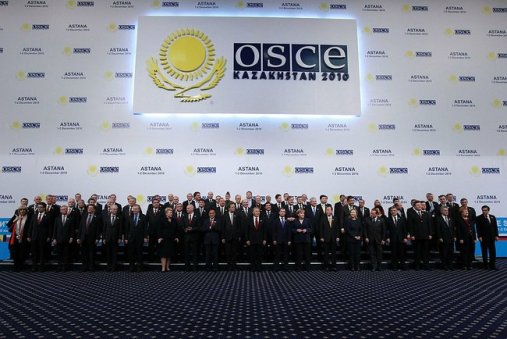
Participants in the Organisation for Security and Cooperation in Europe summit (Photo : The Presidential Press & Information)

Please also visit : INDONESIAKATAKAMI.WORDPRESS.COM


December 01, 2010 (KATAKAMI / KREMLIN.RU) --- PRESIDENT OF RUSSIA DMITRY MEDVEDEV: Mr Nazarbayev, Mr Chairman, ladies and gentlemen,

This is the first time that an OSCE summit is taking place in the eastern part of the region the organisation covers. It makes me doubly happy to be here in the capital of friendly Kazakhstan, whose strenuous efforts and political will as country holding the OSCE presidency have given new impetus to the common European process. I take this opportunity to thank Kazakhstan once again for this summit’s excellent organisation.

This meeting is taking place in an anniversary year. The Helsinki Final Act was signed 35 years ago, marking a new stage in the efforts to establish a common security space, and now common democratic space too, from Vancouver to Vladivostok.

The Russian Federation has affirmed its commitment to the Helsinki Final Act and its spirit on numerous occasions. One important step in this direction was the proposal we made in 2008 to conclude a legally binding treaty on European security that would guarantee indivisible security for the entire region. I want to thank you for the support that this initiative has received from the OSCE too.

State representatives, political analysts and experts have been discussing this initiative over the last two-and-a-half years, including in the Russia-NATO Council, at Russia-EU meetings, academic forums, and in the OSCE as part of the Corfu process. Old stereotypes still remain strong perhaps, and this initiative might be a long way ahead of its time, but I am certain that sooner or later this treaty’s time will come.


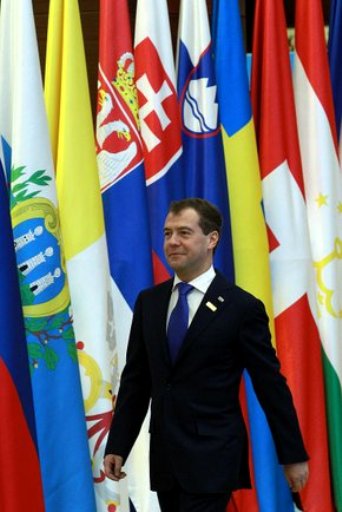
Russian President Dmitry Medvedev

Practically all OSCE members recognise now that dividing lines must become a thing of the past, all citizens, no matter where they live, have equal rights to security, and all countries taking part in whichever alliances must guarantee that their actions will not be to the detriment of the security of countries not part of these alliances. The summit’s draft political document on establishing a security community in the OSCE region follows this spirit. I am sure that we will be able to approve a reasonable and balanced document.

The world is changing fast, and the nature of risks and threats is changing with it. The Conference on Security coped with its tasks in the 1970-80s, ensuring that political and ideological differences did not grow into conflict, and maintaining stability in Europe. Today, we must remain unswerving in our commitment to the OSCE principles, which establish peaceful relations between countries, set every human being’s right to life as the highest value, and exclude military force as a means for settling territorial disputes.

We are grateful for the support that many countries have given our proposals on arms control and confidence-building measures. The process of renewing the 1999 Vienna document has already begun, and we hope that a new draft of this document will be approved in time for the 2011 ministerial meeting. We hope too to finally break the deadlock on the issue of the conventional arms control regime. This is not just our hope but is something we will work on actively, helping to find solutions to these issues.

The OSCE countries face new challenges in security’s humanitarian dimension too. This has already been spoken about today. We are all long since living in a common information space. True, this information space is still far from ideal, and we need to work at national and international level to settle the question of access to information, and also protect the information environment from extremists while at the same time protecting and guaranteeing people’s rights and freedoms.

We cannot build a common democratic Euro-Atlantic space unless we fulfil our obligations to give people freedom of movement. Let us recall that the organisation’s member states agreed back in 1975 to simplify visa procedures, and in 1989 agreed to examine the question of abolishing entry visas, but sadly, we have made no progress on this issue. It remains one of the big problems that we discuss as part of our relations with the European Union, for example. We are ready to move forward on this issue and take action.
The globalisation era with its openness, access and mobility offers us not just new opportunities but also brings us new trials. We need to manage a constantly changing environment and combine financial and economic interests with the needed level of social protection. Of course, we need to maintain our moral principles too and not be tempted by ‘simple solutions’ of the kind that populists and radicals like to offer. This is especially important in any case for Russia, with its centuries-old traditions of interethnic and inter-faith harmony.

Of course, all countries have their own national agendas. We are all thinking about how to respond to new dangers, and there are no universal recipes in this sense. But the OSCE, with its unique potential, could do much more to help us resolve these problems and address transnational threats such as terrorism, human trafficking, drugs crime and other threats.

We also need to reflect on the contribution the OSCE can make to cooperation on emergency responses to natural and manmade disasters.

Perhaps most important of all is to develop a set of common principles for conflict resolution, to be applied in all crisis situations and not just selected cases. These principles are not resorting to force, reaching agreements between the parties, respect for negotiation and peacekeeping decisions, and protecting the rights of civilians in the conflict zone. I stress the point that conflicts must be settled exclusively through peaceful means. Using military force, as the Georgian leadership did in South Ossetia in August 2008, is totally unacceptable.

Russia is consistent in its desire to breathe new life into the Helsinki principles and put them into practice. This requires us to modernise the OSCE, modernise its forms and style of work. The organisation has begun to lose its potential, and this is something we need to look at frankly. I think we cannot simply keep producing new obligations and instruments to enforce them, but need to give the organisation a clearer legal base and establish universal rules for the use of its resources.

Russia has worked together with its partners to produce a draft OSCE charter and proposals for improving its organisational work. This is the only way to keep the organisation relevant and integrate it organically into the new global system that is starting to take shape. I am sure that, using the cooperation-based Security Platform that was adopted in 1999, the OSCE can become a driving force for developing cooperation between NATO, the European Union, the Council of Europe, the Commonwealth of Independent States, and the Collective Security Treaty Organisation. All of the countries in these organisations are also members of the OSCE, and in this sense the OSCE is a universal forum.

Thirty-five years ago, during the height of the Cold War, our predecessors rose above ideological differences and took decisions that were truly revolutionary for their time. Today, when ideological barriers no longer stand in our way and military confrontation has ended, we can and must join forces to resolve the problems before us.

I want to wish the future OSCE chairs success in their work, and congratulate Ukraine on being chosen to preside over the organisation in 2013. I wish you all success in this difficult but important job.

Thank you for your attention.  (*)

Medvedev took part in the summit of the Organisation for Security and Cooperation in Europe


Addressing the Organisation for Security and Cooperation in Europe summit (Photo : The Presidential Press & Information)

Please also visit : INDONESIAKATAKAMI.WORDPRESS.COM

December 01, 2010 (KATAKAMI / KREMLIN.RU) --- Addressing the summit’s plenary meeting, Mr Medvedev said the OSCE needs to modernise its work and form a clear legal base and universal rules for using the Organisation’s resources.

The President said that countries must remain unswerving today in their commitment to OSCE principles, which establish peaceful relations between nations, make every human being’s right to life the greatest value, and exclude military force as a means of settling territorial disputes.

Mr Medvedev declared the need for a common approach to conflict resolution in all crisis situations based on the principles of not resorting to force, reaching agreement between the parties, respecting approved negotiation and peacekeeping decisions, and protecting the rights of civilians in the conflict zone.

Conflicts must be settled exclusively through peaceful means and the use of military force is unacceptable.
The President also said that Russia has presented a draft OSCE charter and proposals for improving its structure and work.

Mr Medvedev had meetings with President of Kazakhstan Nursultan Nazarbayev and Dutch Prime Minister Mark Rutte on the summit’s sidelines.

The President also had talks with Turkish President Abdullah Gul, Prime Minister of Greece Georgios Papandreou, and discussed the Eurasian Economic Community’s upcoming agenda with the organisation’s Secretary General, Tair Mansurov.  (*)

Desember 01, 2010

Obama, Republicans agree to negotiate on taxes


U.S. President Barack Obama (C) and Vice President Joe Biden (3R) meet with bipartisan Congressional leadership in the President's Private Dining Room at The White House November 30, 2010 in Washington, DC. Attending the meeting, clockwise from President Obama are: Sen. Harry Reid, D-NV, Majority Leader, Sen. Mitch McConnell, R-KY, Republican Leader, Sen. Dick Durbin, D-IL, Assistant Majority Leader, Sen. Jon Kyl, R-AZ, Republican Whip, Vice President Biden, Rep. Eric Cantor, R-VA, Republican Whip, Rep. Steny Hoyer, D-MD, Majority Leader, Rep. John Boehner, R-OH, Republican Leader, and Speaker Nancy Pelosi, D-CA. During their first formal meeting since the mid-term elections, Obama spoke about taxes, the START treaty and finding common ground with Republicans. (Photo by Pete Souza/The White House via Getty Images)

Please also visit : INDONESIAKATAKAMI.WORDPRESS.COM


November 30, 2010 (KATAKAMI / Reuters) - President Barack Obama and Republican leaders sought to break a "logjam" over the fate of Bush-era tax cuts on Tuesday, forming a new panel the White House hopes will reach a compromise within days.

Obama named Treasury Secretary Tim Geithner and budget director Jack Lew to work with congressional Republicans and Democrats on a deal to prevent broad tax increases from hitting middle-income Americans next year.

The working group will also tackle the issue that most divides the two political parties: what to do about extending tax cuts for the wealthiest Americans.

At their first White House meeting since the November 2 congressional election, Obama and Republicans stuck to their divergent positions but the president said they agreed the issue must be resolved by the end of this year.

"We agreed that there must be some sensible common ground, so I appointed my Treasury Secretary, Tim Geithner, and my budget director, Jack Lew, to work with representatives of both parties to break through this logjam," Obama said.

If no agreement is reached, all tax-paying Americans could see higher bills next year, giving Republicans a chance to score politically by making tax cuts their priority when taking control of the House of Representatives in January.

Finding common ground before then will be tricky.

Chris Van Hollen, a top Democrat in the House of Representatives, said the chamber could vote on Thursday to extend lower tax rates on income levels up to $200,000 for individuals or $250,000 for couples, allowing rates for the wealthiest 2 percent of Americans to rise.

That vote is seen as a gesture to liberal Democrats, who want to go on record opposing an extension for top earners. If the measure passes the House, it will likely die in the Senate, where Democrats would not have the votes to make it law.

Knowing that, the president may have to agree to extend cuts for Americans of all income levels for one to three years -- an onerous option to many Democrats but one that may be the most likely outcome if the two sides agree on anything at all.

But many analysts are not optimistic.

Charlie Smith, chief investment officer at Pittsburgh-based Fort Pitt Capital Group, said there was less than a 50 percent chance that the tax cuts will be extended.


House Speaker-designate John Boehner (R-OH), participates in a media briefing after GOP leaders met at the White House with U.S. President Barack Obama on November 30, 2010 in Washington, DC. In their first face-to-face meeting the leaders hoped to make progress in a compromise over the expiring Bush tax cuts. (Photo by Mark Wilson/Getty Images)


WIDE DIFFERENCES

Obama said he and many Democrats continue to believe it would be "unwise and unfair" to spend $700 billion to extend tax cuts for the wealthiest Americans while also trying to bring down the U.S. deficit.
Republican leaders, emboldened by gains in the elections, argued it would be better for the economy if tax cuts for all Americans were extended.

"Republicans made the point that stopping all the looming tax hikes and cutting spending would, in fact, create jobs and get the economy moving again," said Representative John Boehner, who will become Speaker of the House next year.

"We're looking forward to the conversation with the White House over extending all of the current rates, and I remain optimistic."

Obama met for about two hours with Boehner and Mitch McConnell, the Republican leader in the Senate, as well as Democrats Nancy Pelosi, the current House speaker, and Harry Reid, the Senate majority leader.

The president said he hoped the meeting would lead to a better relationship with congressional leaders and White House spokesman Robert Gibbs said Obama expressed regret for not having reached out more to Republicans in the past.

Republicans won a majority in the House in the November 2 elections but the Democrats retained control of the Senate.

"MUCK THINGS UP"

Expiration of all the lower tax rates, especially those for the middle class and lower-income Americans, would harm the U.S. economic recovery, many economists say.

It could cut economic growth by roughly 1 percentage point a year, according to some Wall Street estimates, though many believe any bump in taxes would be short term.
 
Brian Gardner, an analyst for investors at Keefe, Bruyette and Woods, said Pelosi may side with liberals before becoming minority leader in the next congressional session.

"There is some thought that the last thing that Nancy Pelosi wants to do on her way out of the Speaker's office is to have Congress approve an extension for tax cuts for the wealthy," he said. "She could muck things up a little bit."

Democratic Senator Charles Schumer has floated a possible compromise to keep the tax cuts for those making less than $1 million a year but the White House indicated that proposal did not have legs.

Reid has made clear he would like to hold a Senate vote on extending the rates only for those up to the $250,000 level to underscore the Democratic position, although such a vote is sure to fail.  (*)

November 30, 2010

Photostream : France's President Nicolas Sarkozy meets Lebanon's Prime Minister Saad al-Hariri


France's President Nicolas Sarkozy waits for the arrival of Lebanon's Prime Minister Saad al-Hariri at the Elysee Palace in Paris November 30, 2010. (Getty Images / REUTERS/Charles Platiau )

France's President Nicolas Sarkozy (R) greets Lebanon's Prime Minister Saad al-Hariri as he arrives for a lunch at the Elysee Palace in Paris November 30, 2010. (Getty Images / REUTERS/Charles Platiau )

French President Nicolas Sarkozy (R) gestures as he welcomes Lebanese Prime minister Sa'ad al-Din al-Hariri prior to a meeting on november 30, 2010 at the Elysee Palace in Paris. (Photo cby ERIC FEFERBERG/AFP/Getty Images)

Iran agrees to new nuclear talks with EU, UN leaders


Iranian President Mahmoud Ahmadinejad speaks during a press conference in Tehran on November 29, 2010 where he said that Iran's right to enrich uranium and produce (nuclear) fuel is "non-negotiable", as six major powers prepare to hold a new round of talks with Iran on its nuclear programme next month. (Photo by BEHROUZ MEHRI/AFP/Getty Images)


Please also visit : INDONESIAKATAKAMI.WORDPRESS.COM


November 30, 2010 (KATAKAMI / FRANCE 24 / AFP) - Iran agreed Tuesday to a new round of talks in Geneva on December 6 and 7 with world powers on its controversial nuclear programme, an EU foreign affairs spokesman said.

Iran chief negotiator Said Jalili will meet for talks with EU chief diplomat Catherine Ashton, who will lead the international delegation, the spokesman said.

"We've now received a response from the Iranian authorities in which they have said that Dr. Jalili has accepted Catherine Ashton's proposal to meet in Geneva," the spokesman said.

"Talks between Catherine Ashton and Dr. Jalili will now take place on Monday and Tuesday next week in Geneva."

Ashton would lead the so-called "3+3" or "5+1" group of nations negotiating with Iran made up of the five permanent members of the UN Security Council (the United States, Russia, China, France, and Britain) and Germany.

The talks will be the first between Iran and six world powers since October 2009.

Disagreement over the agenda has held up the talks. The world powers want the talks to focus on Iran's uranium enrichment programme but Tehran wants a wider discussion that includes regional security issues.

The United States, Europe and Israel fear that Iran wants to use nuclear technology to build a bomb, but Tehran insists that its programme is a peaceful drive to produce civilian energy.  (*)

Obama, Republicans in tax face-off at White House


President Barack Obama (left) and House Speaker-elect US Representative John Boehner

Please also visit : INDONESIAKATAKAMI.WORDPRESS.COM


November 30, 2010 (KATAKAMI / Reuters) - President Barack Obama faces off with Republican congressional leaders over taxes on Tuesday in a test-of-wills that could foreshadow how the White House works with the opposition party in the coming two years.

Obama will host Republicans John Boehner, the next Speaker of the House of Representatives, and Mitch McConnell, the party's leader in the Senate, as well as Democrats Nancy Pelosi, the current Speaker, and Harry Reid, the Senate Majority Leader, at 10:30 EST at the White House.

Taxes will be at the top of their agenda.

With a broad victory in November 2 elections behind them, Republicans are eager to force Democrats to agree to extend Bush-era tax cuts for wealthy Americans as well as the middle-class constituency that concerns Obama the most.

Democrats have been in disarray about how to proceed, despite an impending deadline: the tax cuts expire at the end of this year, and Obama is keen to avoid a situation in which American families making less than $250,000 a year face a tax hike on Jan 1.

To prevent that, he may have to agree to extend cuts for Americans of all income levels for one to three years -- an onerous option to many Democrats, but one that may be the most likely outcome if the two sides agree on anything at all.

Obama has said the United States cannot afford to pay the $700 billion it would cost to extend tax cuts for the rich, but he has also signaled a willingness to compromise after the "shellacking" his party received in this month's election.

The White House said a deal was unlikely to be reached at Tuesday's meeting, which Obama said he hoped would jump-start a better relationship between him and the newly empowered Republicans.

"My hope is that tomorrow's meeting will mark a first step toward a new and productive working relationship," Obama said. "Because we now have a shared responsibility to deliver for the American people on the issues that define not only these times but our future -- and I hope we can do that in a cooperative and serious way."


House Speaker-elect US Representative John Boehner speaks during a press conference November 18, 2010 on Capitol Hill in Washington, DC. Boehner now awaits near-certain election by the full House as speaker when Republicans step into Congress on January 5 after seizing the majority from US President Barack Obama's Democrats. (Photo by KAREN BLEIER/AFP/Getty Images)

GET THE JOB DONE

Boehner and McConnell, who could become Obama's main adversaries next year, wrote in an opinion piece that their party would insist on extending tax cuts for everyone during the "lame duck" congressional session that ends this year.

Republicans will control the House and have greater strength in the Senate next year.

"If President Obama and Democratic leaders put forward a plan during the lame-duck session to cut spending and stop the tax hikes on all Americans, they can count on a positive response from Republicans," the two men wrote in a Washington Post piece published on Tuesday.

"If the president and Democratic leaders don't act before the end of the year, however, House and Senate Republicans will work to get the job done in the new Congress. But we hope it doesn't come to that."

The Republicans will put that position on the table during the meeting with Obama, which will also be attended by Vice President Joe Biden, Treasury Secretary Tim Geithner, budget director Jack Lew and other congressional leaders.

Obama invited the congressional leaders for a White House dinner earlier this month, but it was put off for scheduling reasons, which some Democrats interpreted as a Republican snub of the president's outstretched hand.  (*)

Russia's Medvedev warns of new arms race


Russian President Dmitry Medvedev speaks in Moscow's Kremlin, Russia, Tuesday, Nov. 30, 2010. In his annual address to members of both houses of parliament, Medvedev's focus on improving children's lives and encouraging larger families reflected serious concern over the demographic plunge that hit post-Soviet Russia. (Kremlin.Ru)

Please also visit : INDONESIAKATAKAMI.WORDPRESS.COM


November 30, 2010 (KATAKAMI / Reuters) - President Dmitry Medvedev warned on Tuesday that a new arms race would be sparked within the next decade unless Russia and the West forged an agreement to cooperate on building a missile defense system.

In his annual State of the Nation address, Medvedev called for closer cooperation with the United States and the European Union, holding out the prospect of closer ties two decades after the Soviet Union's collapse ended the Cold War.

But he said tension would ratchet up fast, forcing Russia to bolster its military arsenal, if Western offers of cooperation on a system to defend against missile threats failed to produce a concrete agreement.

"In the coming decade we face the following alternatives: Either we reach agreement on missile defense and create a full-fledged joint mechanism of cooperation, or ... a new round of the arms race will begin," Medvedev said.

"And we will have to take a decision about the deployment of new offensive weapons. It is clear that this scenario would be very grave."

The remarks, in a speech of more than an hour to members of parliament and ministers, raised the stakes in sensitive discussions with the United States and NATO on missile defense.

The issue as divided Moscow and the West since the 1980s.

Medvedev agreed to NATO's offer of missile defense cooperation at a summit with the alliance that was hailed as a fresh start, but the plans are sketchy and Russia has warned it wants an equal voice in evaluating threats and responses.

Medvedev has pursued warmer ties with the West and particularly Washington since he was steered into the presidency by his predecessor, Vladimir Putin.

He has embraced President Barack Obama's efforts to "reset" a relationship that hit post-Cold War lows during Russia's war with Georgia in August 2008, months after he took office.

The warning on missile defense appeared to reflect wariness in the Kremlin amid uncertainty about U.S. Senate ratification of the strategic arms limitation treaty that Medvedev signed with Obama in April, centerpiece of the push for better ties.

Russia has warned that it could withdraw from the treaty if a U.S. missile defense system develops into a threat to Russia's security.  (*)

Main points of Medvedev's annual Presidential Address to the Federal Assembly


Russian President Dmitry Medvedev delivers a speech during his annual state-of-the-nation address in the Kremlin in Moscow on November 30, 2010. Russia and the West's failure to agree on a new missile shield for Europe could lead to a new round of the arms race, President Dmitry Medvedev warned today in the address. (Kremlin.Ru)

Please also visit : INDONESIAKATAKAMI.WORDPRESS.COM


November 30, 2010 (KATAKAMI / RIA NOVOSTI) --- Russian President Dmitry Medvedev delivered his third state of the nation address to both houses of parliament in the Grand Kremlin Palace on Tuesday.

His speech to the Russian parliament was broadcast on state television and lasted for about one hour and 15 minutes.

Members of the government and State Council, heads of the Supreme, Constitutional and Higher Arbitration Courts, chairmen of the Audit Chamber and Central Election Commission, and religious leaders attended the event.

In line with the Russian Constitution, the president annually addresses the Federal Assembly, comprising the Federation Council and State Duma, about the domestic situation and the key areas of Russia's foreign policy.


Russian President Dmitry Medvedev, right, on podium, speaks in Moscow's Kremlin, Russia, Tuesday, Nov. 30, 2010. In his annual address to members of both houses of parliament, Medvedev's focus on improving children's lives and encouraging larger families reflected serious concern over the emographic plunge that hit post-Soviet Russia.((AP Photo/RIA Novosti, Dmitry Astakhov, Presidential Press Service)

The Russian president said in his address:

- Agreement on missile defense system will either be reached within the next decade or Russia will need to deploy new strike forces

- Measures against major oil spills should be discussed globally

- Bribe takers should be fined 100 times the amount of the bribe and intermediaries in bribe taking should also be penalized under Russia's Criminal Code

- Russia will discuss the scrapping of visas and Russia's accession to the WTO at the Russia-EU summit in Brussels next week

- At least 50 percent of saved budget funds as well as additional income to the federal budget should be spent on modernization

- The rate of insurance premiums for Russia's small businesses in 2011-2012 will be cut from 34 percent to 26 percent.

- Russian authorities at all levels must get rid of property unrelated to their work

- The government should prepare proposals on penalizing officials for not performing their duties in a timely manner

- Russia should reduce annual inflation to 4-5 percent in the next three years

- Use of maternity capital to pay mortgages must become the norm starting in 2011

- There should be no orphans in Russia because the main goal for orphanages is to help families to adopt children

- People convicted of child abuse will be banned from employment in the education sector
- Care of children should be a key state task

- All Russian regions should have child ombudsmen

- A law on the criminal responsibility for the sales of alcohol to minors will be adopted in the near future

- Russian families should be given a plot of land to build a house on, as well as tax breaks, after the birth of a third child

- Russia must build infrastructure that ensures favorable living conditions for disabled people

- Russia will spend 30 billion rubles (about $1 billion) on the joint research work of the country's leading universities and major companies

- Russia will increase the share of national products on the pharmaceutical market from 20 to 50 percent in the near future

- Russia will spend 100 billion rubles on the development of children's medicine in two years

- Russia will allocate 2 billion rubles for teacher training

- Heads of Russian regions should make annual reports on the environmental situation

- Environmental issues should be discussed with relevant non-governmental organizations before the construction of infrastructure and other facilities

- The Russian government and regional authorities should focus on the development of a military and patriotic movement in the country. (*)


MOSCOW, November 30

President Lee Myung-bak rebukes ministers for response to N. Korean provocation


 Please also visit : INDONESIAKATAKAMI.WORDPRESS.COM


SEOUL, Nov. 30 (KATAKAMI / Yonhap) -- President Lee Myung-bak reproached his Cabinet members Tuesday for not having the right sense of crisis at a time when South Korea's national security is at stake, Lee's office Cheong Wa Dae said, apparently mindful of persistent public outcry over the administration's response to North Korea's latest military attack.

"We should recognize that (South Korea) is confronting the world's most belligerent group," Lee was quoted as saying in a weekly Cabinet meeting. But there seems to be a perception that dealing with a national crisis is a task for only the defense ministry, he said, according to Cheong Wa Dae spokeswoman Kim Hee-jung.

He was presiding over the first Cabinet meeting since the North's attack on the populated island of Yeonpyeong, just south of the tense inter-Korean border in the Yellow Sea, a week ago. The attack killed two marines and two civilians, with nearly 20 others wounded.

"In a divided nation, national security is not relevant to the defense ministry alone. It is a matter for all ministries," Lee said.

The president stressed that Cabinet members should enhance their own awareness of national security first before asking the public to do so.

Lee's comments came amid unrelenting public criticism that the government had fumbled its initial response to the artillery barrage, leading to the resignation of Defense Minister Kim Tae-young and a wave of anti-Pyongyang protests here.

"In a national emergency situation, all Cabinet members must return to their duties regardless of whether they were at the National Assembly or elsewhere," Lee said.

He was apparently referring to the defense minister, who was late to the emergency security meeting at Cheong Wa Dae convened shortly after the North's attack last week due to his attendance at a parliamentary committee.
Delivering a Trade Day speech later in the day, meanwhile, Lee said South Korea is still on track to become the world's seventh-largest exporter despite North Korea's continued military provocations and threats, proof of the international community's trust in the country's economy.

"This is exactly the time for all of us to fulfill our duties in our respective places," he said during an event marking the Trade Day.

South Korea's exports are expected to jump more than 28 percent this year to a record high of more than US$460 billion and again by more than 11 percent next year to reach $520 billion. The major Asian economy is projected to top US$1 trillion in total trade volume next year.

Le said stable economic indicators, including stocks and the currency exchange rate, in spite of the soaring military crisis are evidence that South Korea's economy has matured and that the international community has high confidence in it.  (*)

Lebanese-Iranian talks concluded with the signing of 9 agreements


Hariri had started his last day in Teheran with a meeting with the Supreme Guide of the Islamic Republic of Iran Ayatollah Ali Khamenei, in the presence of the Lebanese delegation, and Mr Rahimi.

Please also visit : INDONESIAKATAKAMI.WORDPRESS.COM


The final statement: Support for the achievement of justice and determination to consolidate relations between the two states. 

November 29, 2010 (KATAKAMI / PM Saad Hariri Official Website ) --- The President of the Council of Ministers Saad Hariri concluded his official visit to Tehran this afternoon with a joint press conference held with the Iranian First Vice President Mohammad Reza Rahimi. The visit resulted in the signing of nine memoranda of understanding in the social and educational sectors.

An expanded meeting took place today at the Saad Abad Palace between the Lebanese and Iranian delegations headed by PCM Hariri and First Vice President Rahimi during which the results of the visit were discussed and the memoranda of understanding were signed in the presence of Hariri and Rahimi:
The Memoranda of Understanding that were signed are as follows:

1. A memorandum of understanding on the rehabilitation of disabled people signed by the Lebanese Minister of Social Affairs Salim Sayegh and the Iranian Minister of Welfare and Social Security Sadeq Mahsouli.

2. A memorandum of understanding on elderly care signed by Ministers Sayegh and Mahsouli.
3. A memorandum of Understanding in the field of child care services signed by Ministers Sayegh and Mahsouli.

4. A memorandum of understanding in the field of administrative reform signed by the Lebanese Minister of Administrative development Mohammed Fneish and the Iranian Minister of Housing and Development Ali Nikzad .

5. A memorandum of understanding on the protection of women and family affairs signed by Ministers Sayegh and Nikzad.

6. A memorandum of understanding in the fields of education and training signed by Minister Sayegh and the Iranian Minister of Education Hamid Reza Hajji-Babayee.

7. A memorandum of understanding in the field of cultural heritage signed by the Lebanese Minister of Culture Salim Warde and the Iranian Culture and Islamic Guidance Minister Seyed Mohammad Hosseini.

8. A memorandum of understanding in the field of drug combat signed by Ministers Sayegh and Nikzad.

9. A memorandum of understanding on the cooperation between the Lebanese and Iranian Ministries of labor signed by the Lebanese Minister of Labor Boutros Harb and the Iranian Minister of Labor and Social Affairs Abdol Reza Shaikhol –Eslami.


Joint press conference


After the signing of the MOUs, PCM Hariri and First Vice President Rahimi held a joint press conference during which Rahimi was asked about the impact of PCM Hariri's visit on the relations between the two countries and whether Iran will play a role in easing tension in Lebanon regarding the Special Tribunal for Lebanon?

Rahimi said: Iran is very delighted with this blessed visit which will undoubtedly strengthen and support the foundations of the existing bilateral relations between our two countries. We highly appreciate the results of this visit because it will enhance the bilateral relations and the existing cooperation on the bilateral level. Thus, this visit comes immediately after the visit of President Ahmadinejad to Lebanon, and we see that it will enhance bilateral relations on all levels.

Regarding the tribunal, we do not see that the problems have reached this situation, and we believe that the wisdom and dexterity of PCM Hariri and of senior Lebanese figures can to contain and resolve this crisis easily, and we have full confidence in the wisdom and statesmanship of PCM Hariri to resolve all topics in this context and that the Lebanese government will solve all these problems. Concerning the Tribunal, the Islamic Republic of Iran supports the truth in its true sense, and we stress in this context the necessity for the International Tribunal to be very far from the political rhetoric, and to distance itself from this rhetoric, as we have also confirmed that we are with revealing the truth and solving the problems in this context.

We would like to emphasize as well that Iran always stands by the Lebanese unity and harmony, and we believe that all Lebanese groups and parties must unite and come together to resolve the quarrels on the Lebanese arena and to focus on their true enemy. Thus, we are with the unity and independence of Lebanon, as we are with strengthening the bonds of brotherhood between the Lebanese and we officially support this orientation.

Question: Prime Minister Hariri, how do you assess the results of your visit to Iran?

PCM Hariri said: “First, I would like to offer my heartfelt thanks to the Supreme Guide Ayatollah Ali Khamenei, the President, the government and the people of the Islamic Republic of Iran. I want also to underline the good results we reached during our talks with His Excellency President Mahmoud Ahmadinejad, First Deputy President Mr. Rahimi and all the other ministers.
This visit reestablishes a good stage in the Lebanese- Iranian relations, and I was able to personally follow-up some of its aspects through the successive visits carried out by Martyr Prime Minister Rafik Hariri to Tehran. Today, we are following the same path and we continue to work for the development of relations between the two countries and follow up the steps which began with the recent visit of President Michel Sleiman to Tehran, and then the visit of His Excellency President Dr. Ahmadinejad to Beirut.

On this occasion, I would like to emphasize the following:

First: The political results of the visit were good and useful because they reaffirmed the common fundamentals of the relationship between the two countries, and that Iran is a friendly state that wants the best for Lebanon and all its citizens. And we, on behalf of the National Unity Government, which represents all the Lebanese people, express a national Lebanese will in building friendly and strong relations with the Islamic Republic of Iran based on common interests, mutual respect, and constant communication between the institutions and the concerned administrations in both countries.
Second: the economic results of the talks made great steps towards a serious and responsible dialogue, and we look forward for its continuation through the establishment of the higher joint Lebanese-Iranian Committee. This step comes together with the understandings that are agreed to implement during the next phase, including the electricity and gas sector, oil exploration, exchange of technical and vocational capabilities and the exchange of expertise in the field of administrative reform. The comprehensive economic vision which we heard from the Iranian leadership can be relied on for the sake of a wide–ranging economic and social development that would include in its positive results more than one Arab and Islamic state. Lebanon can constitute, with an equivalent Arab group, a vital chain of cooperation and coordination in the major regional economic positions, especially after the understanding which was signed by Lebanon, the Turkish Republic, the Syrian Arab Republic and the Kingdom of Jordan.


Third: Lebanon thanks the Islamic Republic of Iran for its support against the Israeli war and its repercussions on the Lebanese people in all areas and particularly commends the excellent support provided by Iran to our people in the South, the Bekaa, and the southern suburbs.

Fourth: The link between the Lebanese internal stability and the regional stability was at the core of the discussions we held. This necessitates reassurance on a number of political constants that stability should be based on, including Lebanon’s right to liberate its land in the South, Lebanon’s commitment to the implementation of Resolution 1701, considering the Arab peace initiative that was launched from Beirut the principle basis for the peace process in the region, and the refusal of the Israeli measures the latest of which was the referendum law on the withdrawal from the occupied Palestinian territories and the occupied Golan. There is also Lebanon’s declaration that it will not be part of any international group to put pressure on Iran and impose siege on the Iranian people. Lebanon also asserts Iran’s right to possess nuclear energy for peaceful purposes, and calls on the international community not to spare any form of negotiations with the Iranian state for this purpose.

I know that you have questions about the internal situation and the Lebanese-Lebanese relations, therefore, I would like to assure everyone that the course of things is moving in the right direction and under two big umbrellas: the Lebanese national dialogue which will not be disrupted regardless of the tensed political rhetoric, and the joint and continued Saudi- Syrian support of the Lebanese issue. I am totally confident that the brotherly and friendly states, particularly the Islamic Republic of Iran, are accompanying this path with real responsibility and all the support that it deserves. Stability in Lebanon is the responsibility of the Lebanese in the first place, and the efforts of the brothers and friends are an added value to this responsibility. Thank you Mr. First Vice President and the media representatives for their attendance, and first and foremost, I thank the Iranian people and its leadership.”

The First Vice President said: In fact, we highly appreciate your current visit to Iran, and we salute the Lebanese Republic, because it defeated the enemy, we support a united, sovereign and independent Lebanon, and we are proud of Lebanon and its people. Our region and your region are related to the Prophet Ibrahim, peace be upon him and in fact, the fire which “alnamroudiyyoun” have sparked has gone and changed into paradise and happiness, and the fire they have set will burn them.

Today the fire of these enemies has reached us while you are among your brothers in Tehran, and assassinated this morning two Iranian scientists. Those who claim to be against terrorism are supporting terrorism and assassinating innocent people, and we will reveal their identities soon.
The Lebanese - Iranian friendship will blind the eyes of these terrible enemies and Lebanon will be more developed and proud, especially since it always stands victorious on the front lines.

I think it is my duty to offer sincere gratitude to Your Excellency and to the Lebanese leadership for the warm reception and generous hospitality received by President Ahmadinejad during his visit to Lebanon, and I must express my sincere thanking and appreciation to the ministers who accompanied you during this visit.

PCM Hariri said: Lebanon was honored to welcome President Ahmadinejad with hospitality as a token of appreciation to what Iran has offered to Lebanon and hopefully these relationships will last. As for the martyrdom of the two scientists today, we consider this to be a terrorist act and offer you our condolences and this act of terrorism must be fought.

In Lebanon, there is a national unity government with one essential equation: the army, the people and the resistance, and this is what we are committed to and our national unity is what will protect us. We will pursue this path and we thank you very much, and thank the Iranian people as well, for their love of Lebanon.

Lebanese Prime Minister Saad Hariri (L) shakes hands with Iran's first vice president, Mohammad Reza Rahimi (R) during the welcoming ceremony at Tehran's Saadabad Palace on November 27, 2010. (Photo by BEHROUZ MEHRI/AFP/Getty Images)

The final statement

The following is the text of the final statement on the occasion of PCM Hariri's visit to Tehran:

“According to the historical ties and friendly relations between the Islamic Republic of Iran and the Lebanese Republic, and after the successful visit of His Excellency Dr. Mahmoud Ahmadinejad, the President of the Islamic Republic of Iran to Lebanon this year, and his meetings and consultations with His Excellency President Michel Sleiman, President of the Lebanese Republic and His Excellency PCM Saad Hariri, which resulted in the conclusion of 16 documents and memoranda of understanding in various areas related to the development of relations, PCM Saad Hariri, visited the Islamic Republic of Iran at the invitation of His Excellency Mr. Rahimi, the First Vice-President of the Republic. He met with High-level officials in the Islamic Republic of Iran, especially His Excellency Dr. Mahmoud Ahmadinejad, President of the Republic, and discussed with them bilateral relations and regional and international developments.

The two sides signed 9 new documents during this visit for cooperation in the economic, commercial, industrial, labor, social and cultural areas. After holding talks and exchanging views on issues of common concern, in an atmosphere of cordiality and understanding, the following was announced:

• In the light of the interest prevailing for the development and enhancement of relations between the two countries, both sides stressed their determination to consolidate these relations between the two states as well as between the institutions and to follow-up the implementation of agreements signed during the visit of President of the Islamic Republic of Iran to Lebanon, as well as the visit of His Excellency Saad Hariri to Tehran.

• The Islamic Republic of Iran supports national unity and stability in Lebanon and its maintenance, and stresses on the equation of coexistence as a model for the democracy of accord in the country.

• The Islamic Republic of Iran expressed its full support to the Lebanese state and the Lebanese people and the national and Islamic resistance in Lebanon against the Zionist enemy.

• The Islamic Republic of Iran emphasizes on the need of the Zionist entity's withdrawal from all the occupied territories in Lebanon, including the Shebaa Farms, Kfarshuba Hills and the village of Ghajar.

• The Islamic Republic of Iran expressed its full willingness to put its potential and capacities in various technical, engineering and economic and agricultural areas at the disposal of the friendly countries, including Lebanon.

• The Lebanese side expresses its appreciation of the role of the Islamic Republic of Iran in supporting the achievement of national unity, security and stability in Lebanon, and the two sides express their support of the common Saudi – Syrian effort in this area.

• The Lebanese side supports the right of the Islamic Republic of Iran in the peaceful use of nuclear technology, and opposes the double standards and discriminatory policy with respect to the nuclear arsenal and weapons of mass destruction of the Zionist entity, which pose a threat to regional peace and security, and calls for a Middle East free of nuclear weapons.

• Both sides condemn the assassination that targeted the Iranian scientist and university professor in Tehran this morning, and consider this crime in the context of terrorism against the Iranian people.

• The Lebanese side announced its commitment to the Arab peace initiative, and the two sides confirmed their support to the struggles of the oppressed Palestinian people in order to liberate all Palestinian territories and the recuperation of their legitimate rights in an independent state and Jerusalem as its capital. The two sides highlight the right of return for the Palestinian people, and reject all Zionist attempts to impose any conditions on withdrawal from all occupied Arab territories.

• The two sides emphasize the necessity of unity and cohesion between all the Muslim States and people, and the need of all concerned parties to take the appropriate action and deal with the temptations of sectarianism, which is without a doubt in the benefit of the enemies.

• The two sides express their support for the achievement of justice and finding the truth in the assassination of martyr Prime Minister Rafic Hariri and his comrades, and for not exploiting the tribunal politically.

• The two sides agreed to form a higher joint committee under the presidency of the First Vice-President of the Islamic Republic of Iran and the Lebanese Prime minister.

• The President of the Council of Ministers Saad Hariri invited Mohammad Reza Rahimi, the First vice president of the Islamic Republic of Iran, for an official visit to Lebanon. Rahimi promised to respond to it as soon as possible. (*)